
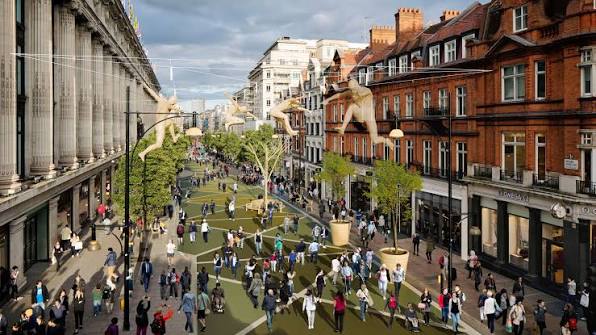
Oxford Street is one of London’s most recognisable destinations, attracting millions of shoppers, tourists, workers and local residents every year. Known for its major department stores, international fashion brands and busy retail environment, the street has played an important role in London’s commercial and cultural identity for generations. However, heavy traffic, crowded pavements, pollution and limited public space have increasingly raised questions about how the area should develop in the future.
The introduction of Oxford Street pedestrianisation represents a major change in the way this historic shopping destination operates. Instead of prioritising motor vehicles, the new approach focuses on pedestrians, public spaces, improved accessibility and a more enjoyable shopping experience. The aim is to create an environment where people can walk comfortably, explore shops, meet friends and enjoy the surrounding attractions without competing with ordinary road traffic.
This transformation is particularly significant because Oxford Street has traditionally been associated with London’s busy transport network. Buses, taxis, private cars and delivery vehicles have shared the road with thousands of pedestrians. Removing general traffic from the central section creates an opportunity to rethink the street’s design and make it more welcoming.
As of November 2026, the first major section has already become permanently traffic-free. The change marks the beginning of a wider regeneration programme that could influence the future of retail, tourism and public transport across London’s West End.
What Is Oxford Street Pedestrianisation?
Pedestrianisation means changing a road or public street so that ordinary motor traffic is removed or significantly restricted, giving priority to people walking. Depending on the design, pedestrianised streets can include seating, trees, outdoor dining areas, public squares, cycle facilities and spaces for cultural events.
In London’s case, the project focuses on transforming part of Oxford Street into a more accessible and attractive public destination. The initial scheme covers the section between Orchard Street and Great Portland Street, extending for almost one kilometre. This includes the area around major shopping destinations and some of the busiest parts of the West End.
The change became effective on 26 October 2026, when the designated section was closed to private motorised vehicles, buses, taxis, private hire vehicles, bicycles, scooters and pedicabs. This means the newly traffic-free area is intended primarily for pedestrians rather than functioning as an ordinary road.
The project is not simply about removing vehicles. It is also about changing how people experience the street. Wider pedestrian space, improved public facilities, greenery and better connections with nearby transport stations are central to the long-term vision.
The Mayor of London, Sadiq Khan, described the launch as a “truly momentous occasion for the capital”, highlighting the importance of the change for one of the country’s best-known shopping destinations.
Why Has London Decided to Transform Oxford Street?
Oxford Street has experienced several challenges associated with its popularity. Its central location attracts enormous numbers of visitors, particularly during weekends, school holidays, seasonal sales and the Christmas shopping period. The combination of pedestrians and road traffic has often made the environment uncomfortable.
One major concern has been pedestrian congestion. Even though Oxford Street has relatively wide pavements in some areas, large crowds can make walking difficult. People frequently stop outside shop entrances, gather around crossings or move between department stores, creating pressure on already busy footpaths.
Road traffic has added another layer of complexity. Buses, taxis, delivery vehicles and other road users have historically competed for limited space. Vehicle movements can also create noise and contribute to an unpleasant street environment.
Another important issue is the changing nature of retail. Online shopping has transformed consumer habits, forcing traditional shopping destinations to offer experiences that cannot easily be replicated on a website. Attractive public spaces, restaurants, entertainment and cultural activities can encourage visitors to spend more time in physical shopping districts.
The regeneration programme aims to address these issues together rather than treating traffic management as an isolated problem.
There is also a wider environmental ambition. Reducing vehicle movements within the designated section can help create opportunities for greener public spaces and a more comfortable walking environment. However, the overall environmental benefits will depend partly on how displaced traffic moves through surrounding streets.
The History and Development of the Pedestrianisation Plans
The idea of transforming Oxford Street has been discussed for many years. Earlier proposals attempted to improve the street environment, but delivering a major traffic-free scheme proved difficult because of transport requirements, political disagreements and concerns about surrounding neighbourhoods.
In September 2024, Sadiq Khan announced proposals to pedestrianise Oxford Street and establish a dedicated organisation to lead its regeneration.
The first major public consultation took place between 28 February and 2 May 2025. More than 6,000 people participated, and the results showed considerable support for the wider transformation. According to the Oxford Street Development Corporation, around two-thirds of respondents who expressed a view supported pedestrianisation.
The plans subsequently moved into a more detailed development stage. In September 2025, Transport for London became the highway authority for the relevant section of Oxford Street, giving it greater responsibility for managing the road network and implementing traffic changes.
A second consultation, organised by TfL, ran from 21 November 2025 until 16 January 2026. It focused on transport and highway arrangements required to enable the proposed changes between Great Portland Street and Orchard Street.
On 4 March 2026, the Mayor confirmed the decision to proceed with the scheme. Construction preparations followed, and the first section officially became traffic-free on 26 October 2026.
The timeline demonstrates that the project developed through several stages of public engagement, planning and transport decision-making rather than happening overnight.
What Areas Are Included in the New Traffic-Free Scheme?
The first phase concentrates on the western section of Oxford Street, between Orchard Street and Great Portland Street. This stretch covers approximately one kilometre and includes some of the area’s most recognisable shopping locations.
BRITAIN-LIFESTYLE-ENVIRONMENT-URBAN-OXFORD STREET
A VISION FOR A WALKABLE LONDON — Walkable London
10
The section is particularly important because it connects major retail destinations and attracts large numbers of international visitors. Selfridges, fashion retailers, restaurants and other businesses all contribute to the area’s commercial activity.
The initial scheme should not be confused with a complete pedestrianisation of the entire street. Oxford Street runs from Marble Arch to Tottenham Court Road, and the first phase does not cover every section between those destinations.
Future changes to the remaining sections would require further consideration, consultation and the necessary approvals. The wider regeneration programme nevertheless aims to improve the overall appearance and experience of the street.
| Project feature | Current position |
|---|---|
| First traffic-free section | Orchard Street to Great Portland Street |
| Approximate length | Almost one kilometre |
| Official launch | 26 October 2026 |
| Main objective | Create a pedestrian-focused public space |
| General motor traffic | Restricted in the designated section |
| Buses and taxis | Removed from the designated section |
| Initial public improvements | Trees, seating, lighting and public spaces |
| Wider regeneration | Further development planned across Oxford Street |
These details are important for visitors planning journeys and businesses preparing for changes in customer access and deliveries.
How the New Street Design Will Improve the Visitor Experience
One of the biggest opportunities created by the project is the ability to redesign the street around people rather than vehicles. Previously, the road environment was dominated by traffic movements, crossings and transport infrastructure. The new approach creates more room for pedestrians to move through the area.
GLA Seeks Design Teams for Oxford Street Transformation and Pedestrianisation
Oxford Street plans given go ahead by residents, visitors an
10
The initial improvements are being introduced through a transitional design. This approach allows the authorities to observe how people use the space before finalising permanent arrangements.
By the end of spring 2027, the plans include more than 50 new trees, over 100 seats, two public squares, rest areas and improved signage. New lighting and dining facilities are also expected to make the environment more comfortable.
These features could make a considerable difference to people who spend several hours shopping in the West End. Visitors will have more opportunities to rest, meet friends and enjoy food without needing to leave the main shopping area.
Public seating is particularly valuable for older visitors, families with children and people who need regular breaks. Similarly, greenery can soften the appearance of a heavily built-up commercial district and provide a more pleasant atmosphere.
Better lighting and signage should also help visitors understand the layout of the area, locate shops and identify nearby transport connections.
The intention is to create a street that works throughout the day rather than functioning mainly as a route between shops.
What Will Happen to Buses, Taxis and Other Vehicles?
Transport arrangements are among the most important aspects of the project. Oxford Street has traditionally been served by several bus routes, taxis and private hire vehicles. Removing these vehicles from the central section requires changes to the surrounding road network.
Pedestrianising Oxford Street | London City Hall
Under the new arrangements, ordinary buses no longer travel through the designated pedestrianised section. Bus routes and stops have therefore needed to be adjusted so passengers can continue reaching the shopping district from nearby streets.
Taxis and private hire vehicles are also excluded from the traffic-free stretch. Passengers who previously relied on direct vehicle access will need to use suitable pick-up and drop-off locations outside the restricted area.
Cyclists and scooter users are also affected because the initial traffic-free scheme excludes them from the designated section. This is an important distinction: the area is not automatically a shared cycling and pedestrian street.
Delivery arrangements require attention as well. Retail businesses depend on regular deliveries, waste collection and servicing. These activities need to be organised through surrounding streets and suitable access arrangements rather than relying on unrestricted vehicle access along Oxford Street.
The broader transport strategy aims to maintain connections while reducing pressure within the newly pedestrianised area. However, people should check current Transport for London travel information before making journeys because bus routes, stops and road arrangements may change.
The Role of Transport for London and the Oxford Street Development Corporation
A transformation of this scale requires cooperation between several public organisations. Two particularly important bodies are Transport for London and the Oxford Street Development Corporation.
Transport for London is responsible for important parts of London’s transport network. Its role in this project includes managing relevant highway changes, developing traffic arrangements and ensuring that public transport connections continue to function.
The Oxford Street Development Corporation, meanwhile, was established to lead the wider regeneration programme. It is responsible for coordinating the long-term vision and helping transform the surrounding area into a more attractive destination for shopping, leisure, business and culture.
The corporation officially became operational on 1 January 2026. It also took on local planning authority responsibilities for the designated Mayoral Development Area in August 2026.
This gives the organisation an important role beyond the immediate removal of traffic. Its responsibilities involve supporting development, improving the public realm and coordinating the long-term future of the area.
The two organisations need to work closely with Westminster City Council, Camden Council, local businesses, residents and other stakeholders.
Their cooperation is particularly important because changes to one busy street can influence traffic, deliveries, pedestrian movements and business activity across surrounding neighbourhoods.
Economic Benefits for Shops and Local Businesses
Oxford Street is one of the UK’s most important retail destinations. It attracts international brands, independent retailers, department stores, restaurants and hospitality businesses. Its commercial success also supports employment throughout the wider West End.
The new pedestrian environment could provide several economic opportunities. When people feel comfortable walking around an area, they may spend more time exploring shops and visiting nearby restaurants.
A more attractive public environment can also encourage repeat visits. Instead of viewing Oxford Street simply as a place to purchase products, visitors may begin to see it as a destination for dining, entertainment and social activities.
Retailers could benefit from improved visibility and increased opportunities for outdoor promotions, subject to the relevant permissions. Public squares may also provide space for seasonal celebrations, cultural events and temporary activities.
The Christmas shopping season is particularly significant. Oxford Street traditionally experiences substantial visitor numbers during November and December. A traffic-free environment could make the experience more comfortable during this busy period.
However, economic benefits are not guaranteed. Some businesses may experience challenges related to deliveries, customer access, servicing arrangements and changes in transport habits.
Smaller retailers may have different requirements from major department stores. Businesses that depend on quick vehicle access or customers arriving by taxi could face additional adjustments.
For this reason, successful regeneration must consider the needs of different business types rather than focusing exclusively on large retailers.
Environmental Benefits and the Importance of Cleaner Air
Air quality has long been an important concern in central London. Heavy traffic can contribute to pollution, noise and an unpleasant street environment, particularly in areas where large numbers of people spend time outdoors.
Removing general traffic from the designated section offers an opportunity to reduce direct vehicle emissions within that space. It may also help create a quieter environment where people can walk and spend time without the constant presence of road traffic.
The introduction of more than 50 trees is another important part of the planned improvements. Trees can provide shade, improve the visual character of streets and contribute to urban biodiversity when selected and maintained appropriately.
Green public spaces can also make shopping districts more comfortable during warmer weather. Seating areas surrounded by planting may encourage visitors to take breaks rather than spending their entire visit inside shops and restaurants.
Nevertheless, the environmental impact needs to be assessed across the wider area. If vehicles are diverted into nearby residential streets without effective traffic management, some environmental pressures could simply move elsewhere.
Westminster City Council has raised concerns about the need for a full environmental impact assessment, particularly regarding traffic, noise and air quality. These concerns demonstrate why monitoring surrounding streets is essential.
A genuinely sustainable transformation should improve environmental conditions across the wider neighbourhood, not just within the traffic-free section.
Accessibility and Benefits for People with Different Needs
Accessibility is a central consideration in any major pedestrian-focused development. Removing vehicles can create a more comfortable environment, but the final design must also work for people with different mobility requirements.
Older people, wheelchair users, visually impaired visitors and families with young children all need public spaces that are easy to navigate.
Smooth walking surfaces, clear pedestrian routes, appropriate crossing arrangements and accessible entrances can make the shopping district easier to use. Seating is another important feature because not everyone can comfortably walk long distances without resting.
The area’s transport connections are also relevant. Bond Street and Tottenham Court Road stations provide access to the wider shopping district, while Elizabeth line services have improved connections across central London.
However, accessible transport connections do not automatically make every part of the street accessible. The detailed design must account for the needs of people travelling between stations, shops, public facilities and nearby streets.
Clear signage and sufficient space for pedestrians are particularly important during busy periods. Poorly positioned street furniture or crowded pedestrian routes could create new obstacles.
The transitional phase provides an opportunity for accessibility groups to share feedback and identify practical problems before permanent improvements are completed.
A successful scheme should make the area welcoming for everyone, including people who cannot walk quickly or comfortably.
Challenges and Concerns Surrounding the Project
Although the transformation has attracted considerable support, it has also generated debate. Large public infrastructure changes rarely benefit every group in exactly the same way, and this project is no exception.
One major concern involves traffic displacement. Removing vehicles from Oxford Street changes where buses, taxis, delivery vehicles and private cars travel. Nearby roads could experience increased pressure if alternative routes are not properly managed.
Residents are particularly interested in how these changes will affect local access, noise levels, parking and daily journeys.
Another concern relates to deliveries. Retailers need reliable arrangements for receiving products and removing waste. If servicing becomes more complicated or expensive, some businesses could face additional operating costs.
There are also questions about taxi access. Visitors with mobility requirements may depend on vehicle-based journeys, making suitable pick-up and drop-off points particularly important.
Westminster City Council has emphasised the need for cooperation between the organisations responsible for the project. Its concerns include traffic management, environmental impacts, public safety and the operational needs of local communities.
There is also the challenge of maintaining the pedestrian environment. A busy public street needs regular cleaning, maintenance, lighting inspections and effective crowd management.
These issues do not necessarily undermine the project, but they show why long-term planning and public feedback will be essential.
How the Project Could Change London’s Tourism Industry
Oxford Street is an important part of London’s tourism experience. International visitors often include it in their itineraries because of its famous department stores, fashion brands and proximity to other major attractions.
A more pedestrian-friendly environment could strengthen its appeal. Visitors who feel comfortable walking through the area may be more likely to explore neighbouring streets, visit restaurants and spend additional time in the West End.
How to tackle your Contiki pre-departure | Contiki
Warm Weather Helps High Street Sales To Rise
10
The project could also create opportunities for cultural events and seasonal celebrations. Public squares and open spaces can accommodate temporary installations, performances and community activities, making the street more than a conventional shopping destination.
For international tourists, a comfortable walking environment can make exploring central London easier. The nearby Underground and Elizabeth line stations also provide connections to other parts of the city.
However, tourism growth will depend on more than the appearance of the street. Visitors also need convenient transport, accessible facilities, clear information and a good selection of shops and restaurants.
If these elements work together, the regeneration programme could strengthen Oxford Street’s position as an internationally recognised retail and leisure destination.
What Happens Next: The Future Development Programme
The October 2026 launch is an important milestone, but it represents the beginning rather than the completion of the wider regeneration programme.
The initial traffic-free arrangement is a transitional scheme. Authorities intend to observe how pedestrians use the space, collect information and gather feedback from residents, businesses, workers and visitors.
The planned improvements by spring 2027 include more than 50 trees, over 100 seats, two public squares, dining tables, rest areas and better lighting and signage.
This phased approach is useful because it allows the design team to understand what works in practice. For example, pedestrian movement patterns may reveal where additional seating is needed or where public spaces should be adjusted.
The longer-term programme also considers Oxford Street as a wider destination extending beyond the initial traffic-free section. The overall ambition is to improve the environment from Marble Arch towards Tottenham Court Road.
Any further traffic management proposals for other sections will be subject to the appropriate consultation and approvals. Therefore, it would be inaccurate to assume that the entire length of Oxford Street will automatically become traffic-free.
The permanent design process will need to balance retail activity, public transport, accessibility, environmental improvements and the needs of neighbouring communities.
Why the Transformation Matters for the Future of High Streets
High streets across the UK are experiencing significant changes. Online shopping, rising operating costs, changing consumer expectations and competition from shopping centres have affected traditional retail districts.
Successful high streets increasingly need to provide experiences that go beyond buying products. People want attractive places where they can shop, eat, socialise and enjoy cultural activities.
Oxford Street has the advantage of an internationally recognised identity, a central London location and a strong concentration of established retailers. However, these strengths need to be supported by a comfortable and attractive public environment.
The regeneration programme reflects a broader approach to urban planning in which streets are treated as valuable public spaces rather than simply routes for moving vehicles.
Other cities have experimented with pedestrian shopping streets, low-traffic neighbourhoods and public squares. These developments demonstrate how changes to street design can influence the way people use commercial districts.
For London, the challenge is to create a modern shopping environment without losing the historic character and commercial importance that make Oxford Street special.
The long-term success of the project will depend on whether the improvements deliver practical benefits for ordinary visitors, residents and businesses.
Conclusion
The transformation of Oxford Street marks an important moment in the development of London’s West End. By removing general traffic from the first section between Orchard Street and Great Portland Street, the city has taken a significant step towards creating a more pedestrian-focused shopping destination.
The planned introduction of trees, seating, public squares, improved lighting and better signage could make the area more comfortable and attractive. Retailers, restaurants and tourism businesses may also benefit from an environment that encourages people to spend more time exploring the district.
Nevertheless, important challenges remain. Traffic displacement, delivery arrangements, taxi access, environmental impacts and accessibility will all require careful attention. Cooperation between Transport for London, the Oxford Street Development Corporation, Westminster City Council and local stakeholders will be essential.
Ultimately, Oxford Street pedestrianisation should be judged by the quality of the experience it creates for people who live, work and visit the area. If the transition is managed effectively, Oxford Street could become a more welcoming, greener and more enjoyable destination while retaining its position as one of Britain’s most famous shopping streets.
Frequently Asked Questions
When Did Oxford Street Become Pedestrianised?
The first major traffic-free section officially launched on 26 October 2026. It covers the stretch between Orchard Street and Great Portland Street, extending for almost one kilometre.
The launch introduced a transitional public-space scheme, with further improvements planned for 2027.
Which Part of Oxford Street Is Traffic-Free?
The initial traffic-free area runs between Orchard Street and Great Portland Street. It includes a busy section of the West End shopping district, close to Selfridges and numerous major retailers.
The remaining sections towards Marble Arch and Tottenham Court Road are not automatically included in this initial closure. Further changes would require additional planning and consultation.
Are Buses Still Allowed on Oxford Street?
Ordinary buses are not permitted through the newly traffic-free section. Transport for London has made changes to bus arrangements to maintain connections with the surrounding shopping district.
Passengers should check the latest TfL information before travelling because routes and stops may be adjusted as the wider transport arrangements develop.
Can Taxis and Private Cars Enter the Pedestrianised Area?
Private motorised vehicles, taxis and private hire vehicles are excluded from the designated traffic-free section.
Visitors who require taxi transport should use suitable pick-up and drop-off locations outside the restricted area and plan the remaining journey accordingly.
Will the Entire Street Eventually Become Traffic-Free?
The wider regeneration vision covers Oxford Street from Marble Arch towards Tottenham Court Road. However, the first phase only covers the section between Orchard Street and Great Portland Street.
Any future traffic restrictions or extensions will depend on further consultations, detailed transport planning and the necessary approvals.
What Improvements Are Planned for 2027?
The planned improvements include more than 50 new trees, over 100 seats, two public squares, rest areas, dining tables, improved lighting and better signage.
The intention is to make the street greener, more comfortable and more attractive for shoppers, residents and tourists.
How Will the Changes Affect Local Shops and Businesses?
Businesses may benefit from improved pedestrian access, a more attractive shopping environment and increased opportunities for events and outdoor activities.
However, changes to deliveries, servicing, customer transport and surrounding traffic could create challenges. The long-term economic impact will depend on how effectively these practical issues are managed.
Is Cycling Allowed in the New Traffic-Free Section?
Cycling is excluded from the initial traffic-free scheme, alongside scooters and pedicabs. The area is intended primarily for pedestrians.
Cyclists should use permitted alternative routes and check current local travel guidance before making their journeys.
Who Is Responsible for the Oxford Street Transformation?
Transport for London manages the relevant highway and transport arrangements, while the Oxford Street Development Corporation leads the wider regeneration programme.
Westminster City Council, Camden Council, businesses and local communities also have important roles in supporting the development and addressing its wider effects.
The official launch confirmed that the first phase is intended to be followed by further public-realm improvements, with the transitional design allowing feedback to shape the permanent scheme. London City Hall+1
The Mayor’s March 2026 announcement also confirmed the decision to proceed following a second consultation involving more than 2,700 responses. London City Hall+1
For visitors and businesses, understanding the practical changes introduced by Oxford Street pedestrianisation will be important as London’s famous shopping district enters this new chapter. Further development should be measured not only by how much traffic is removed, but also by whether the surrounding streets, transport connections and public spaces work better for everyone.



One thought on “Oxford Street Pedestrianisation: How London’s Famous Shopping Street Is Changing”