
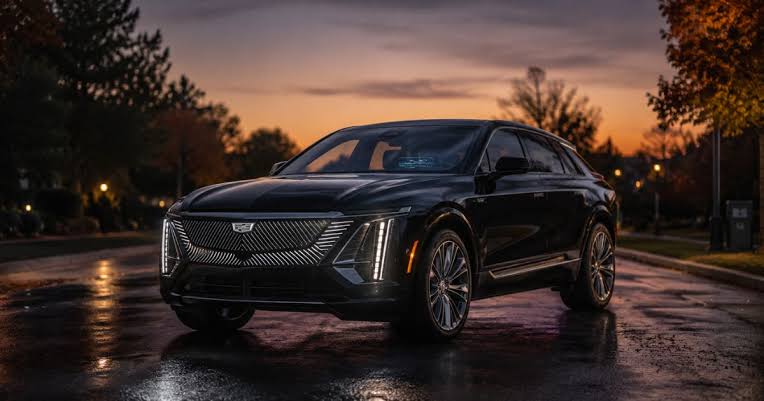
The Cadillac LYRIQ is a premium all-electric SUV designed to combine luxury, impressive performance, and modern electric vehicle technology. One of its useful features is Driver Mode Control, which allows drivers to adjust the vehicle’s driving characteristics according to road conditions and personal preferences. Whether driving through city traffic, cruising on the highway, or navigating slippery roads, these settings help create a more comfortable and controlled experience.
However, many electric vehicle owners want to understand whether selecting a different driving mode actually changes battery consumption or the distance they can travel on a single charge. This is particularly important for drivers who want to maximize their vehicle’s range without sacrificing comfort or performance.
The short answer is that different driving modes can indirectly influence energy consumption and driving range, but they do not change the physical capacity of the LYRIQ’s battery. Instead, they adjust characteristics such as accelerator response, steering effort, suspension behavior, and vehicle performance. These adjustments can influence how much electricity the vehicle uses during everyday driving.
Understanding the differences between Tour, Sport, Snow/Ice, and My Mode can help owners make better decisions about efficiency, performance, and battery management. Let’s explore how these settings work and what they mean for real-world driving.
Understanding the Cadillac LYRIQ’s Driving Modes
The Cadillac LYRIQ offers several driving modes designed to accommodate different driving situations. Depending on the model year, trim level, region, and installed equipment, available options generally include Tour, Sport, Snow/Ice, and My Mode.
Each setting changes selected vehicle characteristics rather than providing a completely different powertrain or battery configuration. The electric motors and battery pack remain the same when switching between modes. What changes is how the vehicle responds to accelerator inputs, steering movements, and certain driving conditions.
According to Cadillac’s owner’s manual, Driver Mode Control adjusts multiple vehicle systems to suit specific driving needs. This means drivers can select a setting that prioritizes everyday comfort, responsive performance, slippery-road traction, or personalized driving preferences.
It is also important to understand that Cadillac does not provide separate official EPA range ratings for each driving mode. The advertised range represents the vehicle’s certified performance under standardized testing conditions, not a guaranteed distance for every setting or driving situation.
Do the Driving Modes in Cadillac LYRIQ Offer Different Ranges or Battery Usages?
The relationship between driving modes and battery consumption is slightly more complicated than simply choosing an efficient or inefficient setting. The modes do not directly increase or decrease the amount of energy stored in the battery. However, they can influence how the driver uses the vehicle, which may affect electricity consumption.
For example, Sport Mode provides a more responsive driving experience. Its accelerator tuning encourages quicker reactions when the driver requests acceleration. If this leads to more frequent hard acceleration, the electric motors may consume more energy. As a result, the estimated driving range could decrease.
Tour Mode is designed for normal city and highway driving, offering a balanced experience. Many drivers may find it easier to maintain smooth acceleration in this setting, potentially supporting better efficiency during everyday journeys.
The important distinction is between the driving mode itself and the driver’s behavior. Selecting Sport Mode does not automatically mean the battery will drain significantly faster. A driver who accelerates gently in Sport Mode may use less energy than someone who drives aggressively in Tour Mode.
In simple terms, the selected mode influences the driving experience, while speed, acceleration, weather, terrain, climate control, and driving habits have a substantial influence on actual energy consumption.
How Each Cadillac LYRIQ Driving Mode Affects Battery Efficiency
Understanding the individual modes makes it easier to choose the right setting for different situations. Although their effects on battery range are not identical, none of these modes changes the battery’s physical capacity.
Tour Mode: Balanced Performance for Everyday Efficiency
Tour Mode is the standard setting for everyday driving. It is designed to provide a smooth and comfortable experience while balancing vehicle handling and responsiveness. For most LYRIQ owners, it is a sensible starting point for daily commuting, errands, and longer journeys.
The accelerator response feels more balanced than in Sport Mode, making it easier to apply power gradually. Smooth acceleration is beneficial for electric vehicle efficiency because sudden increases in power demand can increase energy consumption.
Tour Mode can be particularly useful in urban environments where drivers frequently encounter traffic lights, intersections, and changing traffic conditions. Maintaining a consistent speed and avoiding unnecessary acceleration can help preserve battery energy.
However, Tour Mode does not guarantee the longest possible range in every situation. Highway speed, outside temperature, tire pressure, passenger weight, and climate control settings can have a greater influence on overall consumption.
For drivers who prioritize a comfortable ride and predictable energy usage, Tour Mode is generally the most practical everyday choice.
Sport Mode: Responsive Acceleration and Higher Energy Demand
Sport Mode is designed for drivers who prefer a more engaging driving experience. It adjusts selected characteristics to provide a stronger feeling of road connection, more immediate torque response, and improved steering feedback.
One of the main differences is the accelerator tuning. The vehicle responds differently to pedal inputs, allowing drivers to experience more immediate acceleration when they request it.
Electric motors can deliver substantial torque almost instantly. Although this makes the LYRIQ enjoyable to drive, repeated hard acceleration can increase electricity consumption. Drivers who frequently use the vehicle’s performance capabilities may notice their estimated range decreasing more quickly.
Sport Mode does not necessarily consume dramatically more battery energy simply because it is activated. The actual difference depends on how aggressively the vehicle is driven.
For example, using Sport Mode during a relaxed highway journey while maintaining a consistent speed may not produce a major efficiency difference compared with Tour Mode. However, repeatedly accelerating quickly and slowing down can increase energy use.
Sport Mode is best suited to situations where responsive handling and acceleration are more important than maximizing driving efficiency.
Snow/Ice Mode: Better Control in Slippery Conditions
Snow/Ice Mode is designed to help the LYRIQ maintain better traction on slippery roads. It adjusts accelerator pedal tuning to help optimize vehicle response when driving on snow-covered or icy surfaces.
On slippery roads, excessive torque can cause the tires to lose traction. By adjusting the vehicle’s response, Snow/Ice Mode helps drivers apply power more appropriately for challenging conditions.
This setting can also modify electric all-wheel-drive behavior and steering characteristics, depending on the vehicle’s configuration.
Its primary purpose is safety and vehicle control rather than improving battery range. Energy consumption can vary depending on road conditions, tire grip, outside temperature, and how frequently the vehicle needs to adjust its power delivery.
Cold weather can also reduce electric vehicle efficiency. Battery chemistry becomes less efficient at low temperatures, while cabin heating and battery conditioning may require additional electricity.
Consequently, drivers should not expect Snow/Ice Mode to increase driving range. Its main benefit is helping maintain control when road conditions become difficult.
My Mode: Personalized Driving With Flexible Settings
My Mode allows Cadillac LYRIQ drivers to customize selected vehicle characteristics according to their preferences. Depending on equipment, available adjustments may include acceleration feel, brake feel, steering, suspension, and motor sound.
One useful feature is the ability to choose a more relaxed acceleration response. Drivers who prefer gradual power delivery can configure the vehicle to feel less aggressive during normal journeys.
A personalized configuration can encourage smoother driving, which may help reduce unnecessary energy consumption. However, the effect depends on the selected settings and the driver’s behavior.
For example, someone who selects relaxed acceleration and comfortable steering may find My Mode suitable for daily commuting. Another driver might prefer a sportier accelerator response while maintaining a comfortable suspension setting.
The flexibility of this mode makes it useful for people who want a driving experience that feels more natural to them.
My Mode should not be considered a dedicated battery-saving setting. Instead, it provides the opportunity to create a driving configuration that may support efficient habits.
Comparison of Cadillac LYRIQ Driving Modes
The following table explains the main characteristics of each mode and its potential relationship with energy consumption.
| Driving Mode | Main Purpose | Possible Effect on Battery Usage | Best Situation |
|---|---|---|---|
| Tour | Balanced everyday driving | Can support smooth, efficient driving | Daily commuting and highways |
| Sport | Responsive acceleration and handling | May increase consumption with aggressive acceleration | Performance-focused driving |
| Snow/Ice | Better traction on slippery surfaces | Consumption depends on weather and road conditions | Snow and icy roads |
| My Mode | Personalized driving characteristics | Depends on selected settings and driving habits | Customized everyday driving |
It is worth remembering that this comparison describes general tendencies rather than guaranteed battery-consumption differences. Cadillac does not publish a fixed percentage of additional energy consumption for each mode.
The most useful approach is to monitor the vehicle’s energy information and compare consumption over similar journeys. This provides a better understanding of how different settings affect individual driving habits.
What Actually Determines Cadillac LYRIQ Battery Consumption?
Driving modes are only one part of the efficiency equation. Several other factors can significantly influence how much electricity the LYRIQ consumes.
Understanding these factors is essential for owners who want to improve real-world driving range.
Driving Speed and Acceleration
Vehicle speed is one of the most important factors affecting electric vehicle efficiency. As speed increases, aerodynamic resistance becomes considerably more significant.
A LYRIQ traveling at a moderate, consistent speed will generally use less energy per mile than one traveling at very high highway speeds.
Frequent acceleration also increases power demand. Although electric motors are efficient, producing strong acceleration requires more electricity from the battery.
Maintaining a steady speed, anticipating traffic conditions, and avoiding unnecessary rapid acceleration can help improve overall efficiency.
Outside Temperature and Weather Conditions
Temperature has a noticeable influence on electric vehicle battery performance. Very cold conditions can reduce battery efficiency and temporarily limit available driving range.
During winter, the vehicle may use electricity to warm the cabin and condition the battery. These systems can increase energy consumption, particularly during shorter journeys when heating requirements are relatively high.
Extremely hot weather can also affect efficiency because air conditioning and battery thermal management require electricity.
Drivers should therefore expect seasonal variations in estimated range rather than assuming that the vehicle will always travel the same distance on a full charge.
Climate Control and Cabin Heating
The LYRIQ provides a comfortable cabin environment, but heating and cooling systems use energy from the battery.
Using high heating settings during winter or running air conditioning continuously in hot weather can increase electricity consumption.
Preconditioning the cabin while the vehicle is connected to a charger can help reduce the amount of battery energy required to reach a comfortable interior temperature after departure.
This is particularly useful when preparing for a long journey or driving during extreme temperatures.
Tire Pressure and Road Conditions
Proper tire pressure is another important part of electric vehicle efficiency. Underinflated tires increase rolling resistance, meaning the vehicle needs additional energy to maintain movement.
Incorrect tire pressure can also affect handling, braking, and tire wear.
Road surfaces matter as well. Smooth paved roads generally require less energy than rough surfaces, loose gravel, or uneven terrain.
Checking tire pressure regularly and following Cadillac’s recommended specifications can help maintain efficient operation.
Vehicle Weight and Additional Accessories
Carrying unnecessary weight can increase energy consumption, especially during acceleration and when traveling through hilly areas.
Roof racks, cargo carriers, and other external accessories can also increase aerodynamic drag. This may become particularly noticeable during highway driving.
Removing accessories that are not needed and avoiding unnecessary cargo can help maintain better driving efficiency.
Does Regenerative Braking Help Increase Cadillac LYRIQ Range?
Regenerative braking is one of the most valuable features of an electric vehicle. It allows the vehicle to recover some of its kinetic energy during deceleration and return that energy to the propulsion battery.
Instead of converting all the vehicle’s movement into heat through conventional friction braking, regenerative braking uses the electric motor to slow the vehicle while generating electricity.
The Cadillac LYRIQ also offers Regen on Demand, which allows drivers to control regenerative deceleration using a paddle behind the steering wheel. When activated, the system slows the vehicle and sends recovered energy back to the battery.
This feature can be particularly useful in city traffic, where drivers frequently slow down and accelerate. Recovering energy during deceleration can help reduce overall energy consumption.
However, regenerative braking does not create free energy. Some energy is always lost through resistance, heat, and other inefficiencies.
The amount of energy recovered also depends on driving conditions and battery status. Regeneration may be limited when the battery is nearly fully charged or cold.
As the Cadillac owner’s manual explains, regenerative braking can be restricted under certain operating conditions. Therefore, drivers should not assume that every braking event will return the same amount of energy.
One-Pedal Driving and Its Relationship With Energy Efficiency
One-Pedal Driving is another feature that can make electric vehicle operation more convenient. It allows the driver to control acceleration and much of the vehicle’s deceleration using the accelerator pedal.
When the driver releases the accelerator, regenerative braking slows the vehicle. This reduces the need to move repeatedly between the accelerator and conventional brake pedal.
For drivers who regularly travel through congested urban areas, this can make everyday driving more comfortable.
One-Pedal Driving can also support efficient driving when used smoothly. Anticipating traffic and gradually reducing accelerator pressure gives the vehicle opportunities to recover some energy.
However, it does not automatically guarantee better range. Aggressive pedal movements and unnecessary acceleration can still increase electricity consumption.
Drivers should also understand that regenerative braking does not eliminate the need for the regular braking system. Conventional brakes remain essential for situations requiring stronger or emergency stopping.
How to Monitor Battery Usage in the Cadillac LYRIQ
The LYRIQ provides energy information that helps drivers understand how electricity is being used during a journey. Learning to interpret these displays can be more useful than relying entirely on the estimated remaining range.
Depending on the model year and software configuration, the vehicle’s energy information may show how much energy is being used by driving, climate control, and other systems.
The energy usage display can help identify whether acceleration, heating, cooling, or other functions are contributing significantly to battery consumption.
Drivers can use this information to evaluate their habits over time. For example, if climate control accounts for a noticeable portion of energy usage during winter, preconditioning while plugged in may be worth considering.
Comparing energy consumption across similar journeys can also help reveal whether a particular driving style is more efficient.
For a meaningful comparison, keep the route, approximate speed, outside temperature, and passenger load as consistent as possible. Changing several variables at once makes it difficult to determine what caused a difference.
Practical Tips to Get More Range From Your Cadillac LYRIQ
Maximizing driving range does not require sacrificing the comfort and luxury that make the LYRIQ appealing. A few practical adjustments can help owners use their available battery energy more effectively.
Use Tour Mode for everyday journeys. This setting provides balanced performance and is a sensible choice for regular commuting and highway travel.
Accelerate gradually. Avoid repeatedly pressing the accelerator aggressively. Smooth power delivery can help reduce unnecessary energy consumption.
Maintain a consistent highway speed. Higher speeds increase aerodynamic drag, so moderate and steady driving can improve efficiency.
Use regenerative braking intelligently. Take advantage of Regen on Demand and available regenerative braking functions when slowing down, particularly in urban traffic.
Precondition the cabin while charging. Heating or cooling the interior before departure can reduce the energy required from the battery during the journey.
Check tire pressure regularly. Properly inflated tires help reduce rolling resistance and support efficient vehicle operation.
Avoid unnecessary cargo. Extra weight and external accessories can affect energy consumption.
Pay attention to weather conditions. Cold temperatures, strong winds, rain, and extreme heat can all influence real-world range.
These habits are generally more valuable than repeatedly switching between driving modes in an attempt to achieve a specific range improvement.
Real-World Range Versus Official Cadillac LYRIQ Range Estimates
One important consideration for electric vehicle owners is the difference between official range ratings and real-world driving results.
The Cadillac LYRIQ’s advertised range depends on its model year, battery configuration, drivetrain, wheels, and applicable testing certification. Different versions may have different official estimates.
EPA range ratings are determined using standardized testing procedures. They provide a useful comparison between vehicles but cannot predict the exact distance every owner will achieve.
Real-world driving introduces variables that laboratory testing cannot fully represent. Highway speeds, temperature, traffic, elevation changes, tire selection, and cabin climate settings can all influence the final result.
For instance, a driver traveling at moderate speeds in mild weather may achieve better efficiency than someone making repeated high-speed journeys in cold conditions.
Similarly, a vehicle operating in Sport Mode may still deliver reasonable efficiency if the driver maintains a smooth driving style.
This is why it is better to evaluate actual energy consumption over several journeys rather than judging battery performance from one trip.
Choosing the Right Driving Mode for Different Situations
Selecting an appropriate mode is about matching vehicle behavior to the driving environment. The LYRIQ provides flexibility so owners can prioritize comfort, responsiveness, or traction when necessary.
For everyday commuting, Tour Mode is generally the most practical choice. It offers balanced acceleration and comfortable handling without encouraging unnecessarily aggressive driving.
For drivers who enjoy responsive performance, Sport Mode provides a more engaging experience. It is particularly suitable for dry roads when sharper acceleration and steering response are preferred.
When encountering snow or slippery road surfaces, Snow/Ice Mode should take priority over attempts to maximize battery range. Maintaining traction and control is more important than achieving the lowest possible energy consumption.
My Mode is useful for drivers who want to personalize their experience. Choosing relaxed acceleration settings may make it easier to maintain a smooth driving style, while other adjustments can improve comfort and handling according to individual preferences.
Ultimately, there is no need to use one mode for every journey. Drivers should select the setting that makes the most sense for the conditions while keeping efficiency in mind.
Frequently Asked Questions
Do the driving modes in Cadillac LYRIQ offer different ranges or battery usages?
Yes, different modes can indirectly influence battery usage and estimated driving range because they adjust vehicle characteristics such as accelerator response and performance. However, they do not change the physical battery capacity.
Actual consumption depends heavily on driving habits, road conditions, speed, temperature, and climate control usage. A driver using Sport Mode gently may achieve similar efficiency to someone driving in Tour Mode.
Which Cadillac LYRIQ driving mode is best for battery efficiency?
Tour Mode is generally the most sensible choice for everyday efficiency because it provides balanced acceleration and comfortable driving characteristics. It can help drivers maintain smooth power delivery during regular journeys.
However, Tour Mode does not guarantee the longest possible range. Driving speed, weather, tire pressure, and acceleration habits remain important factors.
Does Sport Mode drain the Cadillac LYRIQ battery faster?
Sport Mode can contribute to higher energy consumption when drivers frequently use its more responsive acceleration characteristics. Rapid acceleration requires additional power from the electric motors.
Nevertheless, selecting Sport Mode alone does not automatically cause significant battery drain. Smooth driving and consistent speeds can help maintain reasonable efficiency even when this setting is active.
Does Snow/Ice Mode improve the Cadillac LYRIQ’s driving range?
Snow/Ice Mode is primarily designed to improve traction and vehicle control on slippery roads. It adjusts accelerator response and other selected systems to help manage power delivery.
It is not a dedicated battery-saving mode. Cold temperatures and slippery road conditions can reduce electric vehicle efficiency, so drivers should prioritize safety rather than expecting additional range.
Can My Mode be configured to save battery energy?
My Mode allows drivers to personalize selected characteristics, including acceleration feel and other vehicle settings, depending on equipment. Choosing a more relaxed acceleration response may encourage smoother driving.
However, it does not automatically reduce battery consumption. Its efficiency benefits depend on how the vehicle is configured and how the driver operates it.
Does regenerative braking increase the Cadillac LYRIQ’s driving range?
Regenerative braking can help improve overall efficiency by recovering some energy during deceleration and returning it to the battery. This can be particularly useful in city driving, where frequent slowing provides opportunities for energy recovery.
However, regeneration cannot recover all the energy used to accelerate the vehicle. Its effectiveness also depends on battery temperature, charge level, and driving conditions.
Does air conditioning affect Cadillac LYRIQ battery usage?
Yes. Air conditioning and cabin heating require electricity, which comes from the vehicle’s battery. Heavy climate control use can reduce the distance available on a charge.
Preconditioning the cabin while connected to a charger can help reduce this effect. Using moderate temperature settings can also support better overall efficiency.
Should Cadillac LYRIQ owners always drive in Tour Mode?
No. Tour Mode is a practical everyday setting, but it is not necessarily the best option for every driving situation. Sport Mode can provide a more responsive experience, while Snow/Ice Mode is designed for slippery roads.
My Mode offers additional personalization. Choosing the appropriate setting for the conditions is more important than permanently using one mode.
Conclusion
The Cadillac LYRIQ’s driving modes provide useful flexibility for different road conditions and driving preferences. Tour, Sport, Snow/Ice, and My Mode each adjust selected vehicle characteristics, allowing drivers to prioritize comfort, responsive performance, traction, or personalization.
Although these settings can indirectly influence electricity consumption and estimated driving range, they do not change the battery’s actual capacity. The biggest differences in real-world efficiency generally come from driving speed, acceleration habits, temperature, climate control, tire pressure, and road conditions.
For most everyday journeys, Tour Mode is a sensible starting point. Sport Mode is suitable when responsive performance is desired, Snow/Ice Mode supports better control on slippery roads, and My Mode provides additional customization.
The best way to get more distance from the LYRIQ’s battery is to combine an appropriate driving mode with smooth acceleration, sensible highway speeds, intelligent regenerative braking, and proper vehicle maintenance. By understanding how these systems work together, owners can enjoy the SUV’s performance and luxury while making better use of every charge.


One thought on “Do the Driving Modes in Cadillac LYRIQ Offer Different Ranges or Battery Usages?”