
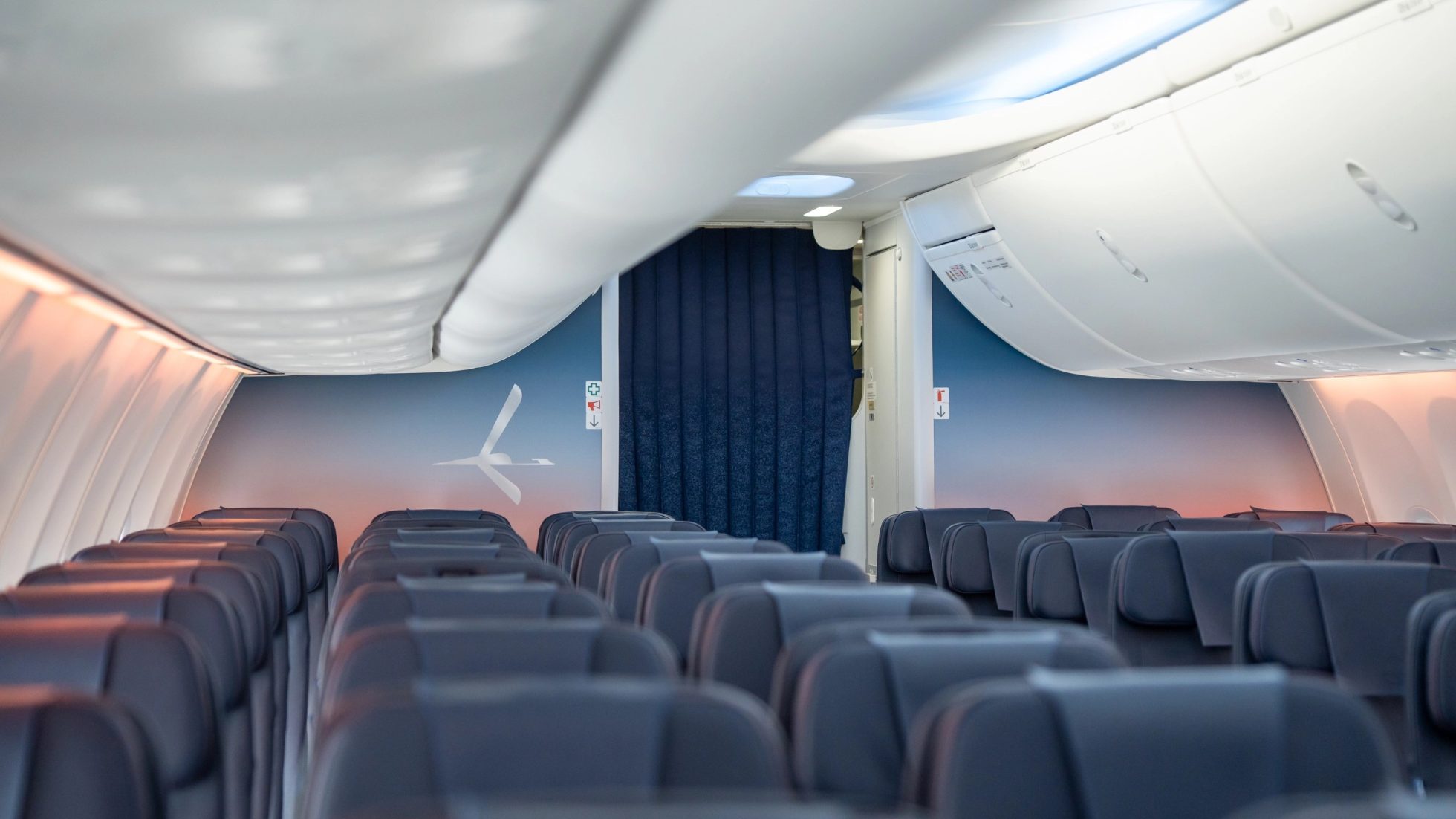
The Boeing 737 MAX 8 is one of the most recognized modern narrow-body passenger aircraft in commercial aviation. Designed for short- and medium-haul routes, this aircraft combines updated engine technology, improved aerodynamics, modern cockpit systems, and passenger-friendly cabin features. It belongs to Boeing’s 737 MAX family, which was developed to provide airlines with better operating efficiency while maintaining the familiar characteristics of the traditional 737 series.
Since entering commercial service, the aircraft has attracted considerable attention from airlines, aviation professionals, passengers, and industry analysts. Its advanced engineering has made it an important part of modern airline fleets, while its history has also raised significant discussions about aircraft certification, manufacturing standards, and aviation safety.
Understanding this aircraft requires looking beyond its appearance and technical specifications. Its development, performance, operating economics, passenger experience, and safety improvements all contribute to its position in the aviation industry.
What Is the Boeing 737 MAX 8?
The Boeing 737 MAX 8 is a twin-engine, single-aisle commercial passenger aircraft developed by American aerospace manufacturer Boeing. It is part of the fourth generation of the company’s popular 737 family and was designed as an improvement over earlier 737 Next Generation models.
The aircraft was developed to meet airline demand for efficient passenger transportation. Airlines wanted an airplane capable of carrying a substantial number of passengers while consuming less fuel and requiring fewer operational changes. Boeing addressed these requirements through new engines, aerodynamic improvements, and updated onboard systems.
The aircraft received its initial certification from the Federal Aviation Administration (FAA) in March 2017. It subsequently entered commercial passenger service with Malindo Air in 2017. Its introduction represented an important development in Boeing’s competition with the Airbus A320neo family.
Although the aircraft retains the familiar 737 appearance, several important engineering changes distinguish it from previous generations. Its larger engines, redesigned engine nacelles, advanced winglets, and revised flight-control systems make it a considerably updated version of the established aircraft design.
History and Development of the Aircraft
The development of the MAX family began as airlines increasingly demanded aircraft with improved fuel efficiency and lower operating expenses. Boeing initially considered different approaches to updating the 737, but the growing popularity of the Airbus A320neo encouraged the company to accelerate development of an updated aircraft.
Rather than introducing an entirely new airplane, Boeing decided to modernize the existing 737 platform. This approach allowed airlines already operating 737 aircraft to benefit from a newer generation while maintaining similarities in airport operations, maintenance procedures, and pilot training requirements.
The 737 MAX program introduced several important improvements, particularly the CFM International LEAP-1B engines. These engines were designed to deliver better fuel efficiency and lower emissions compared with the previous-generation CFM56 engines used on many 737 Next Generation aircraft.
The first 737 MAX aircraft completed its maiden flight in January 2016. After an extensive testing and certification process, the 737-8 received FAA certification in March 2017.
However, the aircraft’s early commercial history was interrupted by two devastating accidents. Lion Air Flight 610 crashed in October 2018, followed by Ethiopian Airlines Flight 302 in March 2019. Both accidents involved the 737 MAX 8 and resulted in the deaths of everyone onboard.
These tragedies led to a worldwide grounding of the MAX fleet and extensive investigations into the aircraft’s flight-control systems and certification process. Boeing subsequently introduced technical changes, pilot-training requirements, and additional safety measures before regulators approved the aircraft’s return to commercial service.
Technical Specifications and Performance
Aircraft specifications help explain why airlines consider this model suitable for a wide variety of commercial routes. Its dimensions, passenger capacity, engine technology, and operating range allow airlines to use it for domestic and international services.
The following table presents key specifications published by Boeing.
| Specification | Boeing 737-8 |
|---|---|
| Aircraft category | Narrow-body passenger jet |
| Manufacturer | Boeing |
| Engine | CFM International LEAP-1B |
| Number of engines | Two |
| Typical two-class seating | 160–180 passengers |
| Maximum seating capacity | 210 passengers |
| Maximum takeoff weight | 82,640 kg |
| Maximum published range | 3,500 nautical miles |
| Range in kilometers | Approximately 6,480 km |
| Aircraft length | 39.5 meters |
| Wingspan | 35.9 meters |
| Aircraft height | 12.3 meters |
These figures represent manufacturer-published specifications rather than guaranteed operating performance on every flight. Actual passenger capacity and range depend on airline configuration, cargo weight, weather, fuel reserves, and operational requirements.
One of the aircraft’s major strengths is its ability to serve routes that require a balance between passenger capacity and operating efficiency. Airlines can use it for busy domestic connections as well as longer regional international journeys.
Its maximum published range also gives airlines greater flexibility when planning flight schedules. However, maximum range should not be confused with the distance every aircraft can travel under normal commercial conditions.
Engine Technology and Fuel Efficiency
Engine technology is among the most important features of the MAX generation. The aircraft uses two CFM International LEAP-1B engines, developed through a partnership between GE Aerospace and Safran Aircraft Engines.
These engines incorporate advanced materials, improved combustion technology, and aerodynamic components designed to reduce fuel consumption. Their engineering helps airlines manage operating expenses while supporting environmental performance targets.
Another important improvement involves the engine’s larger fan diameter. The design provides improved propulsion efficiency, although it also required changes to engine placement and certain aerodynamic characteristics of the aircraft.
The LEAP-1B engines are designed to deliver several operational benefits:
- Improved fuel efficiency compared with earlier-generation engines.
- Reduced carbon dioxide emissions per passenger under comparable operating conditions.
- Lower engine noise levels.
- Advanced monitoring and maintenance capabilities.
- Improved performance across different operating environments.
Fuel efficiency is particularly important for airlines because fuel represents a major part of commercial aviation operating costs. Even relatively small improvements can produce meaningful savings across thousands of flights.
However, actual fuel consumption depends on multiple factors, including aircraft weight, flight distance, cruising altitude, wind conditions, and passenger load. Airline operating practices also influence the overall efficiency achieved during commercial service.
Aerodynamic Design and Exterior Features
The exterior design of the aircraft maintains the recognizable shape of the traditional Boeing 737 while introducing several aerodynamic improvements.
One of its most noticeable features is the Advanced Technology winglet. This wingtip design helps reduce aerodynamic drag by managing airflow around the wing. Lower drag can improve fuel efficiency and support better aircraft performance.
The wings themselves are designed to work with the updated engines and overall aerodynamic configuration. Boeing also introduced changes to the aircraft’s structure and systems to accommodate the requirements of the MAX generation.
The engine nacelles are another distinguishing feature. Their shape and positioning reflect the larger LEAP-1B engines and the engineering changes required to integrate them into the existing 737 platform.
Although these changes may appear relatively subtle to passengers observing the aircraft at an airport, they represent important improvements in aircraft engineering.
The overall design demonstrates how manufacturers can modernize an established aircraft platform without completely changing its basic configuration.
Cabin Design and Passenger Comfort
Passenger comfort is an important consideration when airlines select aircraft for their fleets. The 737 MAX 8 offers a modern cabin environment designed to support commercial operations while providing a comfortable experience for travelers.
Its single-aisle configuration generally uses a three-seat arrangement on each side of the aircraft, creating a familiar seating layout for passengers who regularly travel on narrow-body jets.
Airlines can customize the interior according to their business models. Some offer spacious premium cabins, while others prioritize higher seating capacity and affordable ticket prices.
Common cabin features may include:
- Modern overhead storage compartments.
- LED cabin lighting.
- Updated passenger service units.
- Contemporary seat designs.
- In-seat power or USB charging on selected configurations.
- Improved cabin finishes and interior materials.
One important feature is the Boeing Sky Interior, which incorporates modern lighting, redesigned ceiling panels, and sculpted sidewalls. These design elements help create a more contemporary cabin atmosphere.
However, passenger comfort varies considerably between airlines. Seat width, legroom, entertainment systems, charging facilities, and overhead storage availability depend on the individual airline’s cabin configuration.
A traveler flying on one airline may experience a noticeably different interior from someone traveling on another carrier using the same aircraft model.
Flight Deck and Advanced Technology
The flight deck combines modern digital systems with the familiar operating philosophy of the 737 family. This approach was intended to help airlines transition from earlier 737 models without introducing an entirely different cockpit environment.
The aircraft features large digital display screens that provide pilots with important flight information. These displays help organize navigation data, engine performance information, aircraft status, and other operational details.
Advanced flight-management systems also assist flight crews with route planning and aircraft performance monitoring. Together, these systems support more efficient flight operations and help pilots manage complex operating environments.
Automation plays an important role in modern commercial aviation, but it does not replace the responsibility of trained pilots. Flight crews remain responsible for monitoring aircraft systems, following procedures, and responding appropriately to unexpected situations.
Pilot training is particularly important when introducing new aircraft technology. The MAX program demonstrated how critical it is for manufacturers, airlines, and regulators to ensure that flight crews understand system behavior and potential failure scenarios.
Safety History and Major Accidents
The safety history of this aircraft is an essential part of understanding its development and public reputation. Although the 737 family has a long operating history, the MAX generation experienced two catastrophic accidents shortly after entering commercial service.
The first accident involved Lion Air Flight 610 on October 29, 2018. The aircraft crashed into the Java Sea shortly after departing Jakarta, Indonesia, killing all 189 people onboard.
The second accident involved Ethiopian Airlines Flight 302 on March 10, 2019. The aircraft crashed shortly after departing Addis Ababa, Ethiopia, resulting in the deaths of all 157 passengers and crew members.
Investigations identified serious problems involving the Maneuvering Characteristics Augmentation System, commonly known as MCAS. This flight-control system was designed to respond to certain aerodynamic conditions by adjusting the aircraft’s nose-down trim.
Investigators found that erroneous angle-of-attack sensor information could trigger MCAS activation. In the circumstances surrounding both accidents, repeated system activations contributed to situations that the flight crews struggled to control.
The accidents exposed weaknesses in system design, pilot information, training, and aircraft certification processes. They also prompted major questions about how new aircraft technologies should be introduced and evaluated.
The aircraft was grounded worldwide in March 2019. Boeing subsequently developed software modifications, revised operating procedures, and additional training requirements.
Following regulatory reviews, the FAA approved the aircraft’s return to service in November 2020. Other aviation authorities conducted their own evaluations before permitting commercial operations to resume.
The broader lesson was clear: aircraft safety requires careful engineering, transparent communication, effective training, and independent regulatory oversight.
What Is MCAS and Why Did It Become Controversial?
MCAS was developed to address particular handling characteristics associated with the aerodynamic changes introduced by the larger engines and their placement on the aircraft.
Under specific flight conditions, the system could automatically command stabilizer adjustments to help manage the aircraft’s pitch characteristics.
However, the original implementation relied heavily on information from an angle-of-attack sensor. When the sensor supplied incorrect information, the system could respond inappropriately.
The issue became especially serious because the system could repeatedly activate under certain conditions. Pilots faced a challenging situation involving unexpected aircraft behavior and limited time to identify the underlying problem.
Following the accidents, Boeing revised the system’s operation and introduced additional protections.
The updated design includes improvements intended to prevent erroneous sensor information from producing dangerous repeated commands. Pilot training and documentation were also strengthened to improve understanding of the system.
The MCAS controversy remains an important example of why aircraft automation must be designed around clear safety principles, robust fault detection, and effective human oversight.
The Aircraft’s Return to Commercial Service
Following the 2019 grounding, the return-to-service process involved extensive technical reviews and regulatory assessments.
The FAA required Boeing to make software changes, improve pilot training, and complete additional testing before allowing the aircraft to resume passenger operations.
The revised aircraft underwent flight evaluations, and regulators reviewed the changes to its flight-control systems. Airlines also needed to complete the required maintenance and training activities before returning their aircraft to commercial service.
The FAA approved the return of the MAX to service in November 2020. Other regulators, including aviation authorities in Europe, Canada, and other regions, subsequently completed their own reviews.
This process demonstrated that regulatory approval involves more than simply correcting an individual technical issue. It requires evaluating the overall aircraft design, operational procedures, training requirements, and maintenance arrangements.
The aircraft’s return also highlighted the importance of maintaining public confidence through transparent safety communication.
Manufacturing Quality and the Alaska Airlines Incident
Another important chapter in the MAX story occurred on January 5, 2024, when Alaska Airlines Flight 1282 experienced an in-flight separation of a mid-exit door plug.
The aircraft involved was a 737-9 MAX, not the 737-8 MAX. This distinction matters because the two aircraft belong to the same family but are different variants.
The incident occurred shortly after departure from Portland, Oregon. The door plug separated from the fuselage at approximately 14,830 feet, causing rapid cabin depressurization.
The flight crew returned the aircraft safely to Portland. One flight attendant and seven passengers received minor injuries.
The National Transportation Safety Board investigated the incident and identified serious manufacturing and quality-control problems.
In June 2025, the NTSB reported that inadequate training, guidance, and oversight contributed to the accident. Its investigation also highlighted missing bolts and weaknesses in manufacturing documentation and inspection procedures.
NTSB Chair Jennifer Homendy emphasized the seriousness of the findings, stating:
“The safety deficiencies that led to this accident should have been evident to Boeing and to the FAA.”
This incident reinforced the importance of production quality, manufacturing accountability, and effective regulatory supervision.
It also demonstrated why aviation safety must cover the entire aircraft lifecycle, from initial engineering and manufacturing to maintenance and everyday airline operations.
Boeing 737 MAX 8 Compared With Other 737 MAX Models
The MAX family includes several variants designed for different passenger capacities and route requirements.
The 737-7 is the smaller member of the family, while the 737-9 and 737-10 are larger aircraft intended to accommodate additional passengers.
The 737-8 occupies an important middle position, offering a combination of passenger capacity and operating range.
| Feature | 737-7 | 737-8 | 737-9 | 737-10 |
|---|---|---|---|---|
| Typical two-class seats | 135–160 | 160–180 | 175–195 | 185–210 |
| Maximum seats | 172 | 210 | 220 | 230 |
| Maximum range | 3,800 nmi | 3,500 nmi | 3,300 nmi | 3,100 nmi |
| Length | 35.6 m | 39.5 m | 42.1 m | 43.8 m |
| Engine | LEAP-1B | LEAP-1B | LEAP-1B | LEAP-1B |
Source: Boeing’s published 737 MAX technical specifications.
These differences give airlines flexibility when building their fleets. Smaller aircraft can serve routes with lower passenger demand, while larger variants can accommodate more travelers on busy routes.
The 737-8 offers a useful balance because it combines relatively high passenger capacity with a longer published range than the larger MAX variants.
Environmental Performance and Sustainability
Environmental performance has become an increasingly important consideration for airlines and aircraft manufacturers.
The aviation industry faces growing pressure to reduce carbon emissions, improve fuel efficiency, and limit noise pollution around airports.
The aircraft’s LEAP-1B engines contribute to these objectives by improving fuel efficiency compared with older engine technology. Better aerodynamic performance also helps reduce the amount of fuel required during flight.
Lower fuel consumption can translate into reduced carbon dioxide emissions per passenger, depending on the aircraft’s seating configuration and passenger load.
However, improved efficiency does not mean commercial aviation has eliminated its environmental impact. Aircraft still produce greenhouse gas emissions, and the overall environmental footprint depends on flight distance, operating conditions, fuel type, and passenger demand.
Sustainable aviation fuel is another important development in the industry. Such fuels have the potential to reduce lifecycle greenhouse gas emissions compared with conventional fossil-based jet fuel, depending on their production methods and supply chains.
Future improvements in aircraft technology, operational efficiency, and alternative fuels will continue to shape the environmental direction of commercial aviation.
Airlines That Operate the Aircraft
The MAX family has attracted airlines across several continents because of its operating flexibility and passenger capacity.
Different carriers use the aircraft for domestic, regional, and international services. Its relatively long range for a narrow-body airplane allows airlines to connect cities without necessarily requiring larger wide-body aircraft.
Examples of airlines that have operated or introduced MAX aircraft into their fleets include:
- Southwest Airlines
- United Airlines
- American Airlines
- Ryanair
- Air Canada
- WestJet
- Copa Airlines
- flydubai
- Turkish Airlines
Fleet configurations and individual aircraft assignments can change over time. Not every airline listed operates the same MAX variant, and route availability depends on scheduling decisions.
For airlines, fleet commonality is another consideration. Operating aircraft from the same family can help simplify pilot scheduling, maintenance planning, and spare-parts management.
These advantages can make the aircraft commercially attractive when its technical capabilities match an airline’s network requirements.
Latest Developments and Regulatory Oversight
The MAX program continues to operate under significant attention from regulators, airlines, and the wider aviation industry.
Following the January 2024 Alaska Airlines incident, the FAA increased its oversight of Boeing’s production processes and quality-control systems. The agency also restricted production expansion while requiring improvements in manufacturing practices.
In July 2026, the FAA announced that Boeing could resume issuing airworthiness certificates at the end of production for all 737 MAX and 787 aircraft. The decision followed eight months of production-quality data and regulatory review.
This development reflects progress in manufacturing oversight, but it does not mean that regulatory monitoring has become unnecessary. Aircraft certification, production quality, maintenance, and operational safety remain ongoing responsibilities.
The aviation industry’s experience with the MAX program has also encouraged broader discussions about independent oversight, engineering transparency, and organizational safety culture.
For passengers, the most important point is that commercial aircraft operate within regulatory frameworks involving inspections, maintenance requirements, pilot qualifications, and continuing airworthiness standards.
Why the Aircraft Remains Important to Commercial Aviation
Despite its complicated history, the aircraft remains an important part of the commercial aviation market.
Airlines need aircraft that can transport passengers efficiently while supporting flexible schedules and competitive ticket prices. Narrow-body jets are particularly useful because they can serve routes with different levels of demand without requiring the operating costs associated with larger aircraft.
The MAX 8’s combination of passenger capacity, range, and fuel-efficient engines makes it suitable for a broad selection of airline networks.
It also represents the continuing development of the established 737 platform. Instead of replacing every existing aircraft with an entirely new design, manufacturers can introduce improvements that extend the commercial usefulness of familiar aircraft families.
Nevertheless, long-term success depends on more than engineering performance. Manufacturing quality, customer confidence, regulatory relationships, and consistent safety standards are equally important.
The aircraft’s future reputation will therefore depend not only on its technical capabilities but also on how effectively the industry maintains the improvements introduced following earlier accidents and manufacturing incidents.
Frequently Asked Questions
What is the Boeing 737 MAX 8 used for?
The aircraft is primarily used for short- and medium-haul commercial passenger flights. Airlines operate it on domestic routes, regional connections, and selected longer international services.
Its passenger capacity and operating range make it suitable for routes where airlines need a balance between efficiency and seating capacity.
How many passengers can the aircraft carry?
The aircraft can accommodate up to 210 passengers in a maximum-density configuration, according to Boeing’s published specifications.
Typical two-class seating arrangements generally accommodate between 160 and 180 passengers. The actual number depends on the airline’s cabin design and seating policies.
How far can the aircraft fly?
Its published maximum range is approximately 3,500 nautical miles, equivalent to around 6,480 kilometers.
Actual flight range depends on passenger numbers, cargo weight, weather conditions, fuel reserves, and operational requirements.
Is the Boeing 737 MAX 8 different from the 737-9 MAX?
Yes. Both aircraft belong to the same MAX family, but they have different dimensions, passenger capacities, and operating characteristics.
The 737-8 is shorter and has a lower maximum seating capacity, while the 737-9 is larger and can accommodate more passengers.
What engines does the aircraft use?
It uses two CFM International LEAP-1B engines.
These engines were developed to improve fuel efficiency, reduce noise, and support the aircraft’s overall operating performance compared with earlier-generation 737 models.
Why was the aircraft grounded in 2019?
The worldwide grounding followed two fatal accidents involving Lion Air Flight 610 in October 2018 and Ethiopian Airlines Flight 302 in March 2019.
Investigations identified problems involving the MCAS flight-control system, sensor information, pilot training, and certification processes. Regulators required technical changes and additional safety measures before approving its return.
Is the aircraft still flying commercially?
Yes. Following regulatory approvals beginning in late 2020, airlines returned the aircraft to commercial operations.
Its continued operation is subject to applicable aviation regulations, maintenance requirements, inspections, and operational oversight.
What makes this aircraft fuel-efficient?
Its LEAP-1B engines, aerodynamic improvements, and redesigned wingtip features contribute to better fuel efficiency.
These improvements help airlines reduce operating costs and emissions per passenger under comparable operating conditions.
Conclusion
The Boeing 737 MAX 8 represents an important development in modern commercial aviation. Its advanced engines, aerodynamic improvements, modern cockpit technology, and flexible passenger capacity make it a valuable aircraft for airlines operating domestic and international routes.
However, its history demonstrates that technological progress must always be supported by strong safety practices, transparent engineering, effective pilot training, and independent regulatory oversight. The accidents involving Lion Air and Ethiopian Airlines, followed by the Alaska Airlines manufacturing incident involving a different MAX variant, have had a lasting influence on how the aviation industry approaches safety and quality control.
As commercial aviation continues to evolve, this aircraft remains an important example of both the possibilities and responsibilities associated with modern aircraft development. Its long-term success will depend on maintaining reliable operations, improving manufacturing standards, and ensuring that passenger safety remains the industry’s highest priority.