
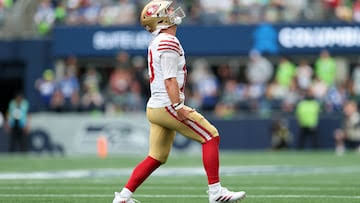
The Seattle Seahawks and San Francisco 49ers delivered an exciting NFC West matchup on October 11, 2026. The 49ers secured a narrow 32–29 victory at Lumen Field in Seattle, following a competitive four-quarter battle. Both teams displayed impressive offensive ability, but San Francisco made the most of its opportunities and managed to finish ahead on the scoreboard.
The game featured strong quarterback performances, important rushing contributions, and several outstanding receiving plays. Brock Purdy led the San Francisco offense, while Sam Darnold attempted to keep Seattle competitive throughout the contest. Wide receivers, running backs, and defensive players also played important roles in determining the outcome.
Looking at the seahawks vs 49ers match player stats provides a clearer understanding of how the game developed. Individual performances reveal which players created scoring opportunities, who controlled the ground game, and which defensive moments influenced the final result.
Seahawks vs 49ers Match Overview
The October 11 meeting was a closely contested divisional game. San Francisco entered Seattle looking to maintain its strong start to the season, while the Seahawks wanted to defend their home field and secure an important conference victory.
The 49ers eventually won 32–29, but the three-point difference reflects how competitive the matchup remained. Seattle produced several productive offensive possessions, particularly through its passing game and running backs. However, San Francisco found enough scoring opportunities to stay ahead when the game reached its decisive moments.
| Match Detail | Information |
|---|---|
| Match date | October 11, 2026 |
| Home team | Seattle Seahawks |
| Away team | San Francisco 49ers |
| Venue | Lumen Field, Seattle |
| Final score | 49ers 32–29 Seahawks |
| Competition | NFL Regular Season |
| Winning team | San Francisco 49ers |
The scoring pattern demonstrated the importance of consistency. Both teams had productive periods, but San Francisco maintained the advantage needed to secure the victory.
Complete Seahawks vs 49ers Match Player Stats
Individual statistics help explain the difference between the two teams. Passing efficiency, rushing production, receiving yards, and turnovers all contributed to the final result.
The following table highlights some of the leading offensive performers from the matchup.
| Player | Team | Passing Yards | Rushing Yards | Receiving Yards | Touchdowns |
|---|---|---|---|---|---|
| Brock Purdy | 49ers | 189 | 6 | — | 2 passing |
| Sam Darnold | Seahawks | 195 | 5 | — | 1 passing |
| Christian McCaffrey | 49ers | — | 68 | 15 | 1 rushing |
| Emanuel Wilson | Seahawks | — | 61 | 11 | 1 rushing |
| Mike Evans | 49ers | — | — | 113 | 1 receiving |
| Jaxon Smith-Njigba | Seahawks | — | 16 | 102 | 1 receiving |
Note: Passing, rushing, and receiving statistics represent separate categories. Touchdown totals identify the scoring contributions shown in the official game statistics.
The numbers show that Seattle actually recorded slightly more passing yards through its starting quarterback. However, San Francisco benefited from a more productive combination of quarterback scoring, rushing touchdowns, and receiving production.
Mike Evans was particularly effective as a receiving target, while Jaxon Smith-Njigba provided Seattle with one of its biggest offensive highlights.
Brock Purdy’s Quarterback Performance
Brock Purdy delivered an important performance for San Francisco. He completed 19 of 29 passing attempts for 189 yards, recording two passing touchdowns and one interception.
His performance demonstrated the value of making productive decisions in important situations. Although his passing yardage was not exceptionally high, he converted opportunities into touchdowns and helped the 49ers maintain their offensive momentum.
Purdy also contributed six rushing yards on five attempts. His ability to move outside the pocket provided an additional dimension to the offense, even though the majority of his impact came through passing.
One of his most important contributions was his ability to connect with different receiving options. Mike Evans became the standout target, while George Kittle and Deebo Samuel provided additional opportunities.
Purdy’s two touchdown passes were especially valuable in a game decided by only three points. His overall contribution was a major reason San Francisco managed to leave Seattle with a victory.
Sam Darnold’s Performance for Seattle
Sam Darnold delivered a productive passing performance despite the defeat. He completed 18 of 29 attempts for 195 yards, recording one touchdown and two interceptions.
His passing yardage was slightly higher than Purdy’s, showing that Seattle was capable of moving the football through the air. However, turnovers made it more difficult for the Seahawks to turn their offensive production into a winning result.
Darnold also recorded five rushing yards on one attempt. His primary responsibility was operating Seattle’s passing offense and finding opportunities for his receivers.
Jaxon Smith-Njigba was one of his most important targets. The receiver recorded five catches for 102 yards and a touchdown, providing Seattle with a major offensive contribution.
Despite the loss, Darnold’s performance showed that the Seahawks had enough offensive quality to compete with San Francisco. Better ball security and more efficient red-zone execution could have changed the final outcome.
Christian McCaffrey’s Rushing Contribution
Christian McCaffrey remained an important part of the 49ers’ offensive strategy. He recorded 68 rushing yards on 11 attempts, averaging approximately 6.2 yards per carry, and scored one rushing touchdown.
His performance provided San Francisco with a reliable ground-game option. McCaffrey’s ability to find running lanes helped the offense maintain balance and prevented Seattle from focusing entirely on stopping the passing attack.
He also contributed three receptions for 15 receiving yards. Although his receiving numbers were relatively modest, his presence as both a runner and receiver gave the 49ers additional flexibility.
McCaffrey’s touchdown was particularly important because rushing scores can help a team maintain control of the game without depending entirely on passing plays.
His contribution demonstrated why an effective running back can have such a significant influence on an NFL matchup.
Mike Evans Leads San Francisco’s Receiving Attack
Mike Evans delivered one of the most impressive individual performances of the contest. He finished with seven receptions for 113 yards and one touchdown on 10 targets.
His performance made him San Francisco’s leading receiver in terms of receiving yardage. He consistently provided the offense with opportunities to advance the football and create scoring situations.
Evans averaged approximately 16.1 yards per reception, demonstrating his ability to gain significant yardage after making catches.
His touchdown reception also added an important scoring contribution. In a closely contested divisional game, a receiver capable of producing explosive plays can make a major difference.
George Kittle and Deebo Samuel also contributed to the receiving game. Kittle recorded five receptions for 24 yards, while Samuel finished with two catches for 21 yards.
Although Evans produced the biggest receiving numbers, the involvement of multiple players helped prevent Seattle’s defense from concentrating on a single offensive option.
Jaxon Smith-Njigba’s Outstanding Performance
Jaxon Smith-Njigba was Seattle’s most productive receiver in the matchup. He recorded five receptions for 102 yards and one touchdown on eight targets.
His performance represented a major positive for the Seahawks. He averaged more than 20 yards per reception, giving Seattle an important downfield threat.
Smith-Njigba demonstrated his ability to create separation and turn passing opportunities into substantial gains. His 102 receiving yards were particularly impressive considering the competitive defensive pressure applied by San Francisco.
He also contributed one rushing attempt for 16 yards. This additional contribution showed how Seattle could use his athletic ability in different offensive situations.
Even though the Seahawks did not win, Smith-Njigba’s performance highlighted his importance to their offensive identity.
His receiving production was one of the clearest examples of Seattle’s ability to create explosive plays against a strong divisional opponent.
Emanuel Wilson’s Contribution to the Seahawks’ Ground Game
Emanuel Wilson played an important role in Seattle’s rushing offense. He recorded 61 rushing yards on 20 attempts and scored one touchdown.
His workload showed that Seattle wanted to establish a consistent ground attack rather than rely exclusively on passing plays.
Wilson averaged approximately 3.1 yards per carry. Although his average was lower than McCaffrey’s, his 20 rushing attempts provided Seattle with a dependable option throughout the game.
He also caught two passes for 11 receiving yards, giving him another way to contribute to the offense.
His rushing touchdown helped Seattle remain competitive and demonstrated the importance of maintaining a balanced offensive approach.
Defensive Performances and Turnovers
Offensive statistics explain much of the scoring, but defensive contributions were equally important.
San Francisco recorded two interceptions during the contest, while Seattle’s defense also managed to create opportunities to disrupt the opposing offense.
Rashan Green was particularly notable for the 49ers, recording two interceptions. These defensive plays helped limit Seattle’s opportunities and created additional challenges for Darnold.
Fred Warner also delivered a productive defensive performance, finishing with 10 total tackles, including five solo tackles. His ability to read offensive plays and contribute against both running and passing situations was valuable.
Other San Francisco defenders contributed through quarterback pressure, tackles, and defensive stops.
For Seattle, the challenge was converting defensive opportunities into sustained offensive momentum. Against a team with multiple scoring threats, defensive consistency was essential.
The matchup demonstrated an important football principle: offensive yardage alone does not determine the winner. Turnovers, defensive pressure, and the ability to protect possession can be just as influential.
Quarter-by-Quarter Scoring Analysis
The final score of 32–29 reflected a competitive game in which both offenses found opportunities to score.
| Quarter | San Francisco 49ers | Seattle Seahawks |
|---|---|---|
| First Quarter | 7 | 7 |
| Second Quarter | 14 | 6 |
| Third Quarter | 0 | 13 |
| Fourth Quarter | 11 | 3 |
| Final Score | 32 | 29 |
San Francisco established an advantage during the second quarter by scoring 14 points. Seattle responded strongly in the third quarter, adding 13 points while holding the 49ers scoreless.
The fourth quarter became decisive. San Francisco scored 11 points, while Seattle managed only three. That difference allowed the visitors to protect their lead and finish the contest with a narrow victory.
The scoring breakdown shows that Seattle had opportunities to take control, particularly during the third quarter. However, San Francisco’s fourth-quarter response proved decisive.
What Made the 49ers More Successful?
San Francisco’s victory came from several important factors rather than one individual performance.
First, the team converted its passing opportunities into touchdowns. Purdy’s two touchdown passes helped the 49ers generate points without needing an unusually high passing-yard total.
Second, McCaffrey provided an effective rushing option. His touchdown and productive carries helped keep Seattle’s defense occupied.
Third, Mike Evans delivered explosive receiving production. His 113 yards gave the offense a reliable downfield threat and helped create important scoring opportunities.
Defensive turnovers also played a significant role. Interceptions can change field position, interrupt offensive rhythm, and create opportunities for the opposing team.
Seattle had several impressive individual performances, but San Francisco combined its offensive and defensive contributions more effectively when it mattered most.
Key Lessons from the Seahawks vs 49ers Match
There are several important takeaways from this divisional matchup.
Quarterback efficiency matters. Darnold recorded more passing yards, but Purdy finished with more passing touchdowns and fewer interceptions. This demonstrates why passing yardage should never be considered the only measure of quarterback performance.
Explosive receivers create opportunities. Evans and Smith-Njigba both surpassed 100 receiving yards. Their performances showed how important reliable wide receivers are in modern NFL offenses.
Running backs provide offensive balance. McCaffrey and Wilson both scored rushing touchdowns, demonstrating the value of establishing a ground attack.
Turnovers influence close games. Defensive interceptions can change the direction of a matchup, especially when the final score is separated by only a few points.
Fourth-quarter execution is essential. Seattle had a productive third quarter, but San Francisco responded effectively in the final period and secured the win.
These lessons make the contest an interesting example of how different areas of football combine to determine a result.
Why These Player Statistics Matter for NFL Fans
Player statistics offer more than a simple record of what happened during a game. They help fans understand individual contributions, evaluate team strategies, and compare performances across the NFL season.
For example, passing yards show how effectively a quarterback moves the football through the air. Completion percentage provides additional information about accuracy, while interceptions reveal potential problems with decision-making or defensive pressure.
Rushing statistics help explain how effectively a team establishes its ground game. Receiving numbers highlight the players responsible for converting passing opportunities into meaningful yardage.
Defensive statistics are equally important. Tackles, sacks, interceptions, forced fumbles, and quarterback pressures provide a broader picture of how a defense performs.
When reviewing the seahawks vs 49ers match player stats, considering all these categories together provides a much more accurate understanding of the game than looking at the final score alone.
Frequently Asked Questions
Who won the Seahawks vs 49ers game on October 11, 2026?
The San Francisco 49ers defeated the Seattle Seahawks 32–29 on October 11, 2026. The game took place at Lumen Field in Seattle and featured a competitive fourth quarter.
How many passing yards did Brock Purdy record?
Brock Purdy completed 19 of 29 passes for 189 yards. He recorded two passing touchdowns and one interception, helping San Francisco secure the victory.
How many passing yards did Sam Darnold have?
Sam Darnold completed 18 of 29 passing attempts for 195 yards. He recorded one passing touchdown and two interceptions during the contest.
Who was the leading receiver in the game?
Mike Evans led all receivers with seven receptions for 113 yards and one touchdown. Seattle’s Jaxon Smith-Njigba also delivered an outstanding performance, recording five catches for 102 yards and one touchdown.
How many rushing yards did Christian McCaffrey record?
Christian McCaffrey finished with 68 rushing yards on 11 attempts and scored one rushing touchdown. He also added three receptions for 15 receiving yards.
What was the final score of the Seahawks and 49ers matchup?
San Francisco won the game 32–29. The 49ers scored 11 points in the fourth quarter, compared with three points for Seattle, helping them secure the three-point victory.
Why are individual player statistics important in this matchup?
Individual statistics reveal how quarterbacks, running backs, receivers, and defensive players influenced the outcome. They help explain offensive efficiency, scoring opportunities, turnovers, and the overall performance of both teams.
Conclusion
The October 11, 2026, matchup between the Seattle Seahawks and San Francisco 49ers provided an exciting example of NFC West competition. San Francisco earned a 32–29 victory through productive quarterback play, effective rushing, outstanding receiving performances, and important defensive contributions.
Brock Purdy delivered two touchdown passes, Christian McCaffrey contributed a rushing touchdown, and Mike Evans led the receiving group with 113 yards. Seattle also had several standout performers, particularly Sam Darnold and Jaxon Smith-Njigba, but turnovers and the fourth-quarter scoring difference ultimately proved costly.
Overall, the seahawks vs 49ers match player stats demonstrate that winning an NFL game requires more than accumulating yards. Teams must convert opportunities into points, protect possession, and execute effectively during crucial moments. This closely contested divisional matchup offered plenty of individual highlights and valuable insight into the strengths of both teams.



One thought on “Seahawks vs 49ers Match Player Stats: Complete Player Performance and Game Analysis”